
Empire v. Empathy
Thoughts on a Choctaw Chapel

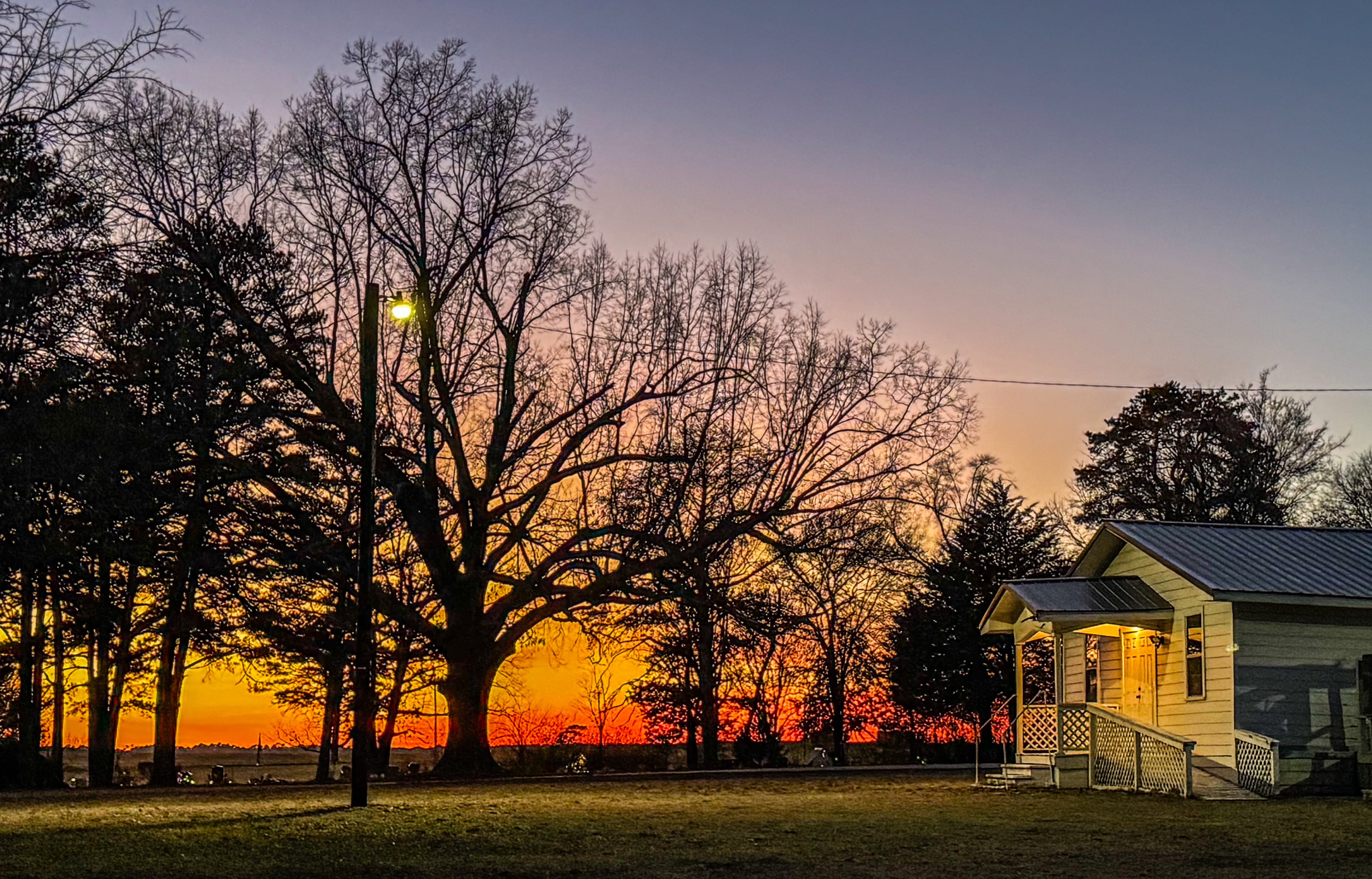
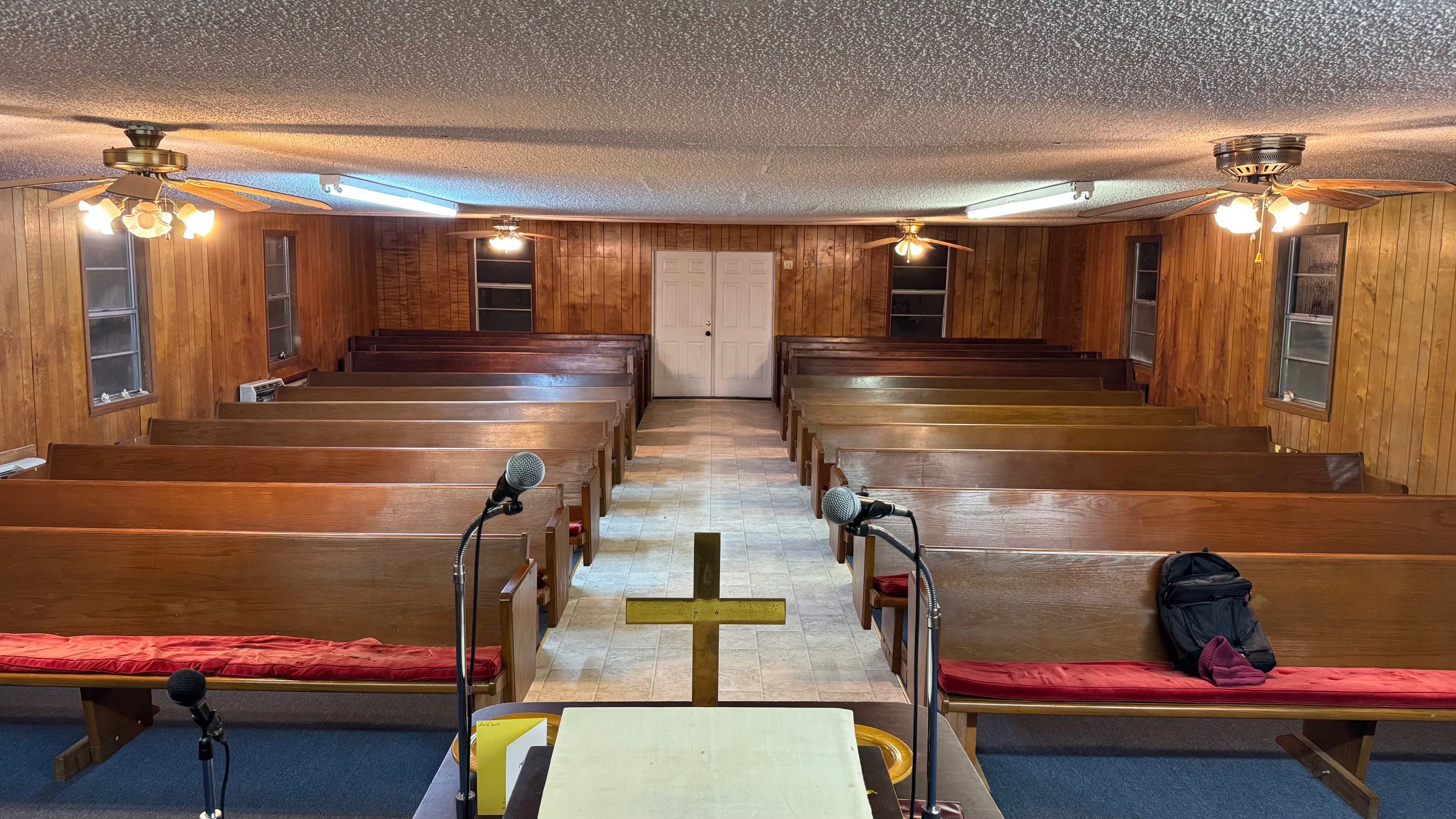
About 20 minutes south of a sparkling, sprawling, and brand-spanking-new hotel and casino complex in Southeast Oklahoma stands a small wood frame church that has been the spiritual home of a Choctaw congregation for generations. The earliest published record of McGee Chapel in Broken Bow dates to 1916, but the roots run much deeper.
The Choctaws
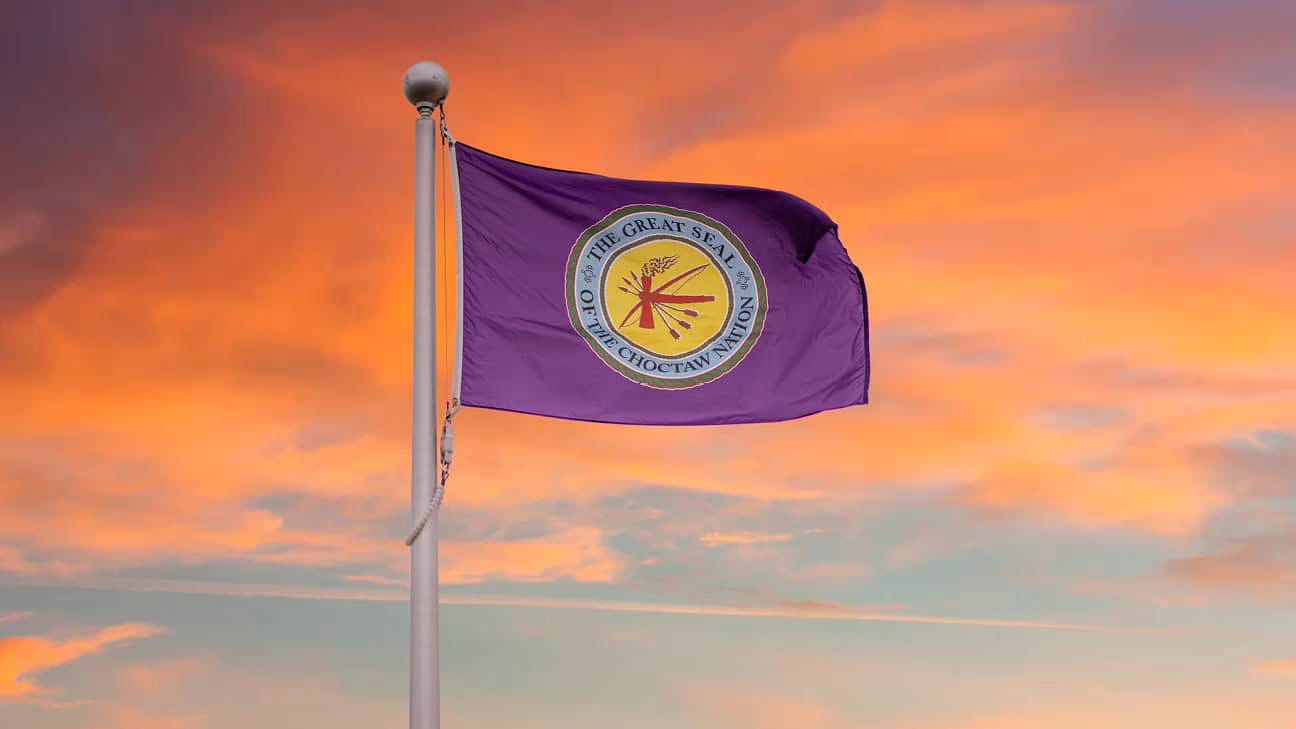
In the early 1830s, the U.S. government systematically dispossessed the Choctaw tribe of millions of acres of their ancestral home, roughly equivalent to the land mass of Mississippi. The Choctaw tribe chooses to use the term “the Removal” to describe what is more broadly known as the Trail of Tears - an arduous, forced march that deposited this ancient people in a corner of modern-day Oklahoma, decimating them along the way.
“Today, the Choctaw Nation is the third-largest Indian nation in the United States, with over 225,000 tribal members.” Spanning 10,864 square miles in Southeast Oklahoma, the Choctaw Nation is larger than Massachusetts. Its 12 council members work alongside the chief to administrate the Nation’s affairs, including law enforcement, social services, and environmental concerns. The tribe is a major employer and economic driver in this part of the world, with a $2.6 billion budget this year.
The Cumberlands
The Cumberland Presbyterian denomination was birthed from the upheaval of the Great Revival of 1800. In a gross oversimplification, the Cumberlands sprang from a power struggle between pro-revival and anti-revival factions within the Presbyterian Church of America. The Cumberlands believed the Great Revival and America’s westward expansion were seismic events that justified relaxing requirements for pastors regarding seminary education and strict credal adherence. When the mother denomination wouldn’t budge, the Cumberlands went their own way.
The denomination, “Has a socially progressive tradition. Cumberland Presbyterians were among the first denominations to admit women to their educational institutions and to accept them in leadership roles including the ordained clergy.” Cumberland Presbyterian missionaries were actively evangelizing the Choctaw people in their native lands before the Removal, and some accompanied them on their forced journey, eventually settling in Southeast Oklahoma. Once there, the Cumberlands continued to dedicate resources to these Choctaw congregations.
Somewhere in my parents’ house, a long-neglected binder of family history documents that at least one of my Carlton ancestors served as a Cumberland Presbyterian pastor in Weakley County, Tennessee. In the early 1900s, some of their descendants crossed the Mississippi River on a barge to forge a new life in the timber-rich Arkansas Delta. Ministry eventually carried my parents to Southwest Arkansas in the early 1980s, and I’ve lived the majority of my life just eight miles from the Choctaw Nation.
The Church
Ronald serves at the host/emcee for McGee Chapel’s annual Brotherhood & Sisterhood week, a revival of sorts for this dedicated but aging Choctaw congregation. He meticulously manuscripts his opening and closing comments in a spiral-bound notebook. The nightly service begins at 7:00 p.m., which is Ronald’s ‘morning.’ He works the overnight shift at the same plant where I’m privileged to serve as chaplain.
Last night was my fourth annual visit to McGee Chapel. Each time, Ronald reminds the parishioners of my brief tenure as a small-town morning radio show DJ.
Years ago, I served as the pastor of a Baptist church that purchased airtime to broadcast the previous week’s message on the local FM station. One particularly dark Sunday morning some 15 years ago, Robert tuned in to that same station, looking for an encouraging Word. It just happened to be my voice Robert heard that day. Last night he told me, “You were talking about Jesus. You said so much so fast that I popped in a cassette and recorded it so I could listen later. I caught every Sunday sermon after that. When you left that church, I lost track of you for a long time, and then you became our chaplain at work. And now here you are in our church.”
“Covid hit us really hard,” said one congregant. “We lost some of our most dedicated older members. They were like the glue that held their families together and in church. After that, a lot of the younger folks scattered. But we’re still here, still hanging on.” Last year, I told the church about my Cumberland roots: “Somewhere back in time, we all share a spiritual ancestor. We are brothers and sisters in Christ, and cousins in this church.” After the service ended, I enjoyed a bowl of soup beside one of those 12 aforementioned commmissioners.
The Crossroads
My text was the Good Samaritan, from chapter 10 of Luke’s gospel. Here’s what brought me to that text, and please excuse another gross oversimplification: Generations before Jesus, a foreign empire conquered Israel. They deported whomever they wanted and coerced them to adopt a foreign culture in a strange land. This foreign empire repopulated that area with different folks, moving entire people groups like chess pawns. The transplanted foreigners intermarried with the remaining Hebrews. Their descendants were the Samaritans.
By the time Jesus walked the earth, bad blood had existed between the Hebrews and Samaritans for generations. In other words, it was an epic script-flip for Jesus to make Samaritan the hero of this parable. A ‘good’ Samaritan would’ve been an oxymoron to a lot of church-going folks… you know, the ones who were too good or busy to stop and help a bleeding, dying victim on the side of the road.
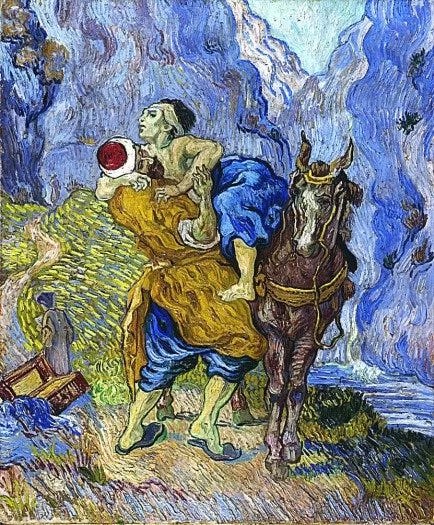
I’ve thought a lot about those two churchy guys who walked right past the bleeding victim. The text doesn’t say exactly why they sidestepped the victim. They couldn’t be defiled by blood or death? They had more important things to attend to, like worship? These two are the stand-ins for every so-called Christian who’s ever taken the Lord’s name in vain as a reason not to be a decent human to someone in need.
As the two religious guys walked past the half-naked, half-dead, fully victimized man in the ditch, were their hearts moved at all? I wonder if those two thought about the victim that night when they tucked themselves into fine linen sheets. Did they ever wonder what became of that dying man when they were trying to pray? Was his broken body ever fodder for their nightmares?
Luke’s two religious experts ignoring the victim in the ditch are the spiritual ancestors of today’s churchgoers who can watch children torn from their parents and be wholly unmoved. They are the spiritual adherents who spiritually bypass their way around the innocents gunned down in broad daylight in American streets saying, “They should’ve just complied. The book of Romans says so.”
In a previous season of my life, I told a congregation: “One major problem in the world today is that our churches are heavily populated by believers who can name three different Greek words for love, but don’t love the brown family down the street.”
The Closing
I know exactly one word in Choctaw: “Halito.” It’s a familiar greeting from the ever-friendly clerks at the Choctaw Plaza, which has fountain Cherry Coke and the good ice. Twenty miles west of McGee chapel lies the historic Wheelock Academy historic site (c. 1832), where Christians sought to indoctrinate young Choctaw converts while systematically eradicating their language. The language, like many elements of Choctaw culture, is resurgent. Each year at McGee, my favorite part of the service is the closing, when the congregation sings the Doxology in their native tongue.
It gets me every time. I stand with head bowed, my eyes doing wet things, as the depth of the moment washes over me. It is the old issue of how we react when confronted with something we don’t understand: Do we mock it, flee it, or seek to obliterate it? Or do we stand in silence, searching for the beauty that lies just beneath the surface, buried by layers and generations of oppression and fear?
It is an ancient story, better than fiction. It is the story of the Kingdom we should pray would come to earth today. Instead, we loftily pray that Jesus will take the evil away one fine day, while we cross on by the other way. I’m tired of wistful waiting while people bleed in the street. Less spiritual bypassing and more of John Lewis’s good trouble.
The Chata Doxology is the warm-up act for the moment when every tribe, nation, and tongue will stand and sing together in perfect harmony. It is the ever-unfolding mystery how the gospel overcomes empire.